
CircHub: connecting circular innovation across Europe
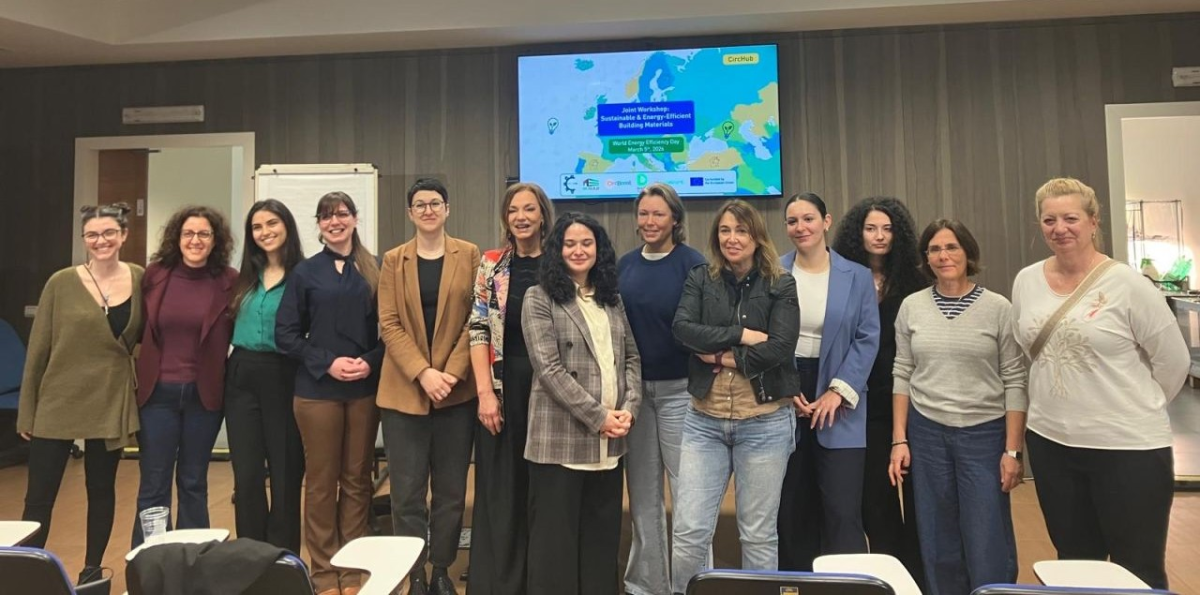
CircHub cluster members at the workshop in Naples, Italy in March 2026.
CircHub is a collaborative cluster network of seven Horizon Europe (HE) projects working together to accelerate the transition toward a more circular and sustainable built environment.
By connecting projects across Europe, the cluster supports knowledge exchange, collaboration, and the wider uptake of innovative, circular solutions for construction and renovation.
The initiative brings together partners working across a range of areas, including bio-based materials, circular construction methods, renovation strategies, and resource-efficient technologies, creating opportunities to share expertise and strengthen the collective impact of EU-funded research.
Drastic is proud to be part of CircHub, collaborating with fellow HE initiatives, sister projects, and wider European networks. Through this collaboration, partners can align activities, exchange lessons learned and increase the visibility of project outcomes across the built environment sector.
Why joining the CircHub cluster is important to Drastic
CircHub objectives:
Strengthen collaboration: Foster knowledge exchange between projects, pilots, living labs, and regions working on circular and energy-efficient building solutions.
Share best practices: Identify synergies and exchange experiences to maximise the impact of research and innovation in sustainable construction.
Support policy development: Contribute coordinated insights and recommendations that help inform EU and national policy discussions on circularity and the built environment.
Increase visibility and impact: Deliver joint dissemination activities and collaborative outputs that reach stakeholders across policy, industry, academia, and local communities.
Build a lasting community: Create opportunities for long-term cooperation through workshops, events, and cross-project exchanges.
Meet the CircHub projects!
Learn more about what the CircHub projects aim to achieve:
- Develops six bio-based materials and four bio-composites to create five consumer-oriented construction products.
- The project aims to reduce environmental impacts by delivering products that outperform fossil-based alternatives while providing economic benefits across the value chain.
- Develops innovative thermal solutions for energy-efficient buildings using fully recyclable bio-based materials.
- The project aims to reduce building energy demand by up to 20%, supporting decarbonisation across the construction and manufacturing sectors.
- Develops high-performance building materials from renewable and bio-based resources by transforming agrifood and natural biomass by-products into durable, safe, and sustainable construction components.
- These materials are validated through demonstration sites.
- Develops, tests, and scales circular solutions for buildings and the construction sector through five large-scale European pilot projects .
- The pilots will demonstrate, at large-scale, novel and integrated solutions for demolition, construction waste processing, management, and valorisation in new products.
- Develops sustainable bio-based construction materials while promoting their uptake through the principles of the New European Bauhaus (NEB).
- The project integrates sustainability, inclusion, and aesthetics to encourage wider public acceptance of bio-based solutions.
Develops circular, eco-friendly, and innovative solutions to reduce emissions from the construction industry by sourcing local alternatives to conventional steel and cement, applying reclaimed components and implementing design for disassembly and reuse.
Learn about recent CircHub project news:
Updates from the CircHub Cluster
CircHub Cluster leads workshop on sustainable & energy-efficient building materials in Naples, Italy
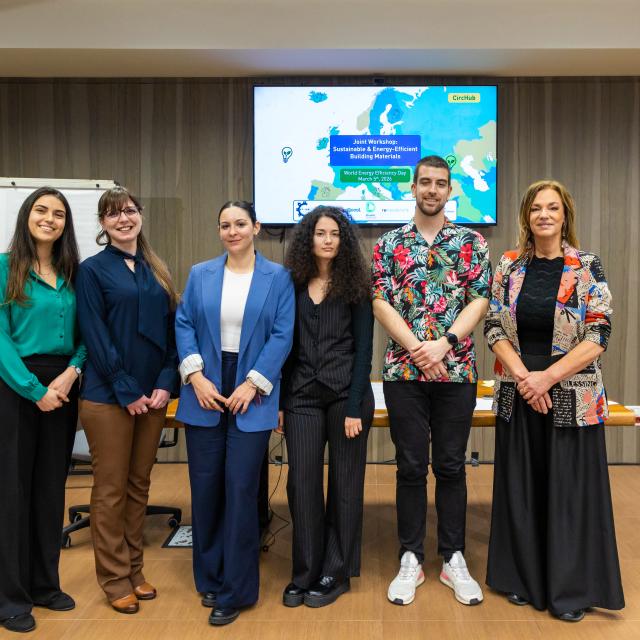
EU Project Collaboration: CircBoost