


Drastic partners gathered in Barcelona for project’s General Assembly
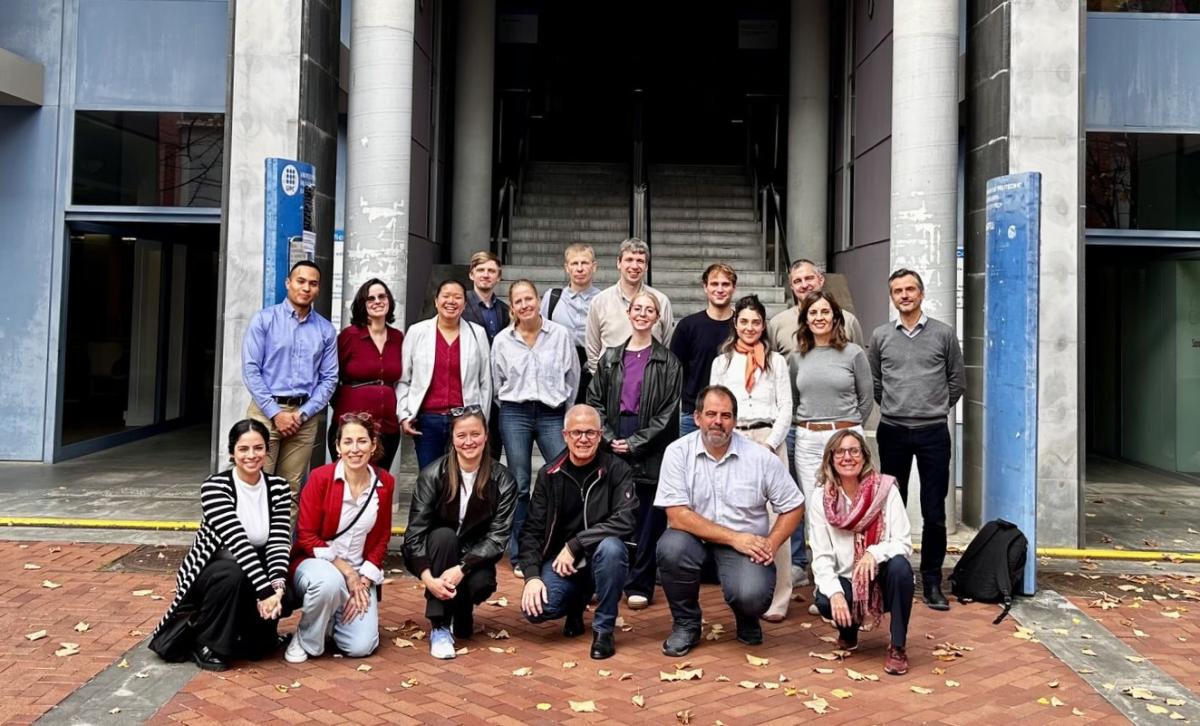
Project partners in Barcelona, Spain, for the General Assembly.
Project partners convened in Barcelona, Spain, in November 2025 for the project’s bi-annual General Assembly.
Drastic’s fourth General Assembly, held at Universitat Politecnica de Catalunya, Barcelona, gathered the project’s consortium at a pivotal moment, as Drastic hits its two-year mark and is privy to a clearer view of the challenges ahead, via the experiences and lessons learned from two years of project proceedings.
An other-worldly introduction
The assembly opened with a reference to the film The Martian, which framed the meeting’s orientation: progress comes from solving one problem at a time and directing energy to what is within reach, to ensure the success of Drastic’s mission. This mindset carried through the General Assembly’s sessions, which blended strategic reflection with deep demonstrations of technical maturity and operational complexity across the project.
The two-day meeting held a special focus on the current challenges each Demonstrator is facing, and how these challenges can be overcome.
Agenda highlights included:
Discussions on communication and dissemination activities
The meeting opened with a focused discussion on upcoming communication priorities, with partners generating ideas and planning varied communication activities and assets for the project in the coming months.
An inspiring presentation from social enterprise, Associació Sao Prat
Associació Saó Prat is an organisation that combines social inclusion with material reuse. Their approach illustrates the social dimension of circular construction—hands on training in deconstruction, a careful process of harvesting and quality control, and significant attention to building market connections for recovered materials.
Associació Sao Prat shared its experiences with the group, which underscored several structural tensions within the sector. The organisation’s model demonstrated how reuse practices can generate both environmental benefit and meaningful employment, but also revealed the limitations created by storage capacity, certification requirements and the need for architects and clients who are willing to work with reclaimed materials.
Insights and problem-solving session
Attendees took part in an ‘innovation screening exercise’, where Drastic’s five Demonstrators presented short SWOT (strengths, weaknesses, opportunities, and threats) analyses and reflected on how they plan to address specific hotspots in their individual solutions.
Across the Demonstrators, the innovations show that high-quality reuse is technically feasible and can provide direct competition with new products. The meeting highlighted the strong technical performance of several reclaimed components used by the Demonstrators, marking a clear improvement over standard demolition and disposal.
Participants also noted key development needs still being addressed, such as improving dismantling protocols, refining testing and inspection methods, strengthening performance-validation data, and scaling preparation and reinstallation processes. These efforts are seen as essential for advancing reliable reuse in future projects.
A site visit to the Laboratory of Structural Technology
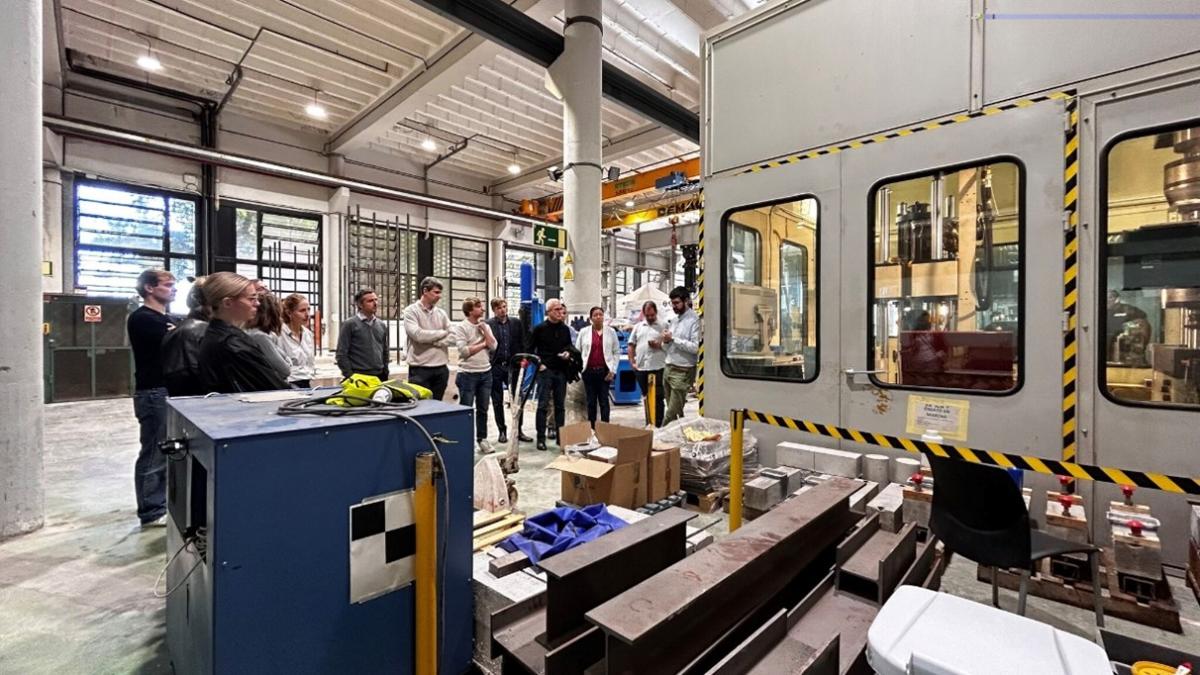
Project partners in the Department of Construction Engineering at the Laboratory of Structural Technology, Universitat Politècnica de Catalunya.
Observing methodology in action, attendees also took part in a laboratory tour in the Department of Construction Engineering at the Laboratory of Structural Technology, Universitat Politècnica de Catalunya (UPC). The tour provided a detailed look into the practice of steel reuse, employed by the project’s Spanish Demonstrator.
The group engaged in an exercise on the theoretical tagging and classifying of steel beams, columns and plates, raising questions about where to cut material, how to evaluate structural integrity and how existing actual shapes influence future design options.
The session reinforced the complexity of structural reuse and illustrated the type of evidence that feeds into various areas of assessment work and traceability development within the project. It also clarified the reliance on consistent documentation and digital identities for reclaimed elements, an aspect that links directly to Drastic’s ongoing work on product passports.
The visit to the UPC laboratories offered a close view of the Spanish Demonstrator testing programme, including characterisation tests, fatigue and fracture assessments, and geometric inspections required for classification under emerging European standards.
A product passport traceability exercise
The team took part in a product traceability exercise that included updates on diagnostics, tagging, asset identification and digital integration, including progress on AI feature recognition and thermal testing.
They then worked in small groups to plan the next 6–12 months for this area of the project, discussing how best to scale assessments, improve traceability and support demonstrators in using the emerging tools.
An exciting culmination at Smart City Expo 2025

Members of the Drastic consortium conduct the Smart City Expo 2025 roundtable.
The General Assembly culminated with a special Drastic-hosted collaborative panel at the Smart City Expo 2025.
You can read all about the panel here.
The next Drastic General Assembly will be held in spring 2026.