


What does it take to scale circular construction? Lessons from Drastic’s Fifth General Assembly
On 2–3 June 2026, partners from across the Drastic consortium gathered at TalTech in Tallinn, Estonia, for the project's fifth General Assembly.
The meeting brought together partners from across Europe to share progress, exchange lessons learned and explore a central challenge facing the construction sector: how can circular construction solutions become practical, scalable and economically viable?
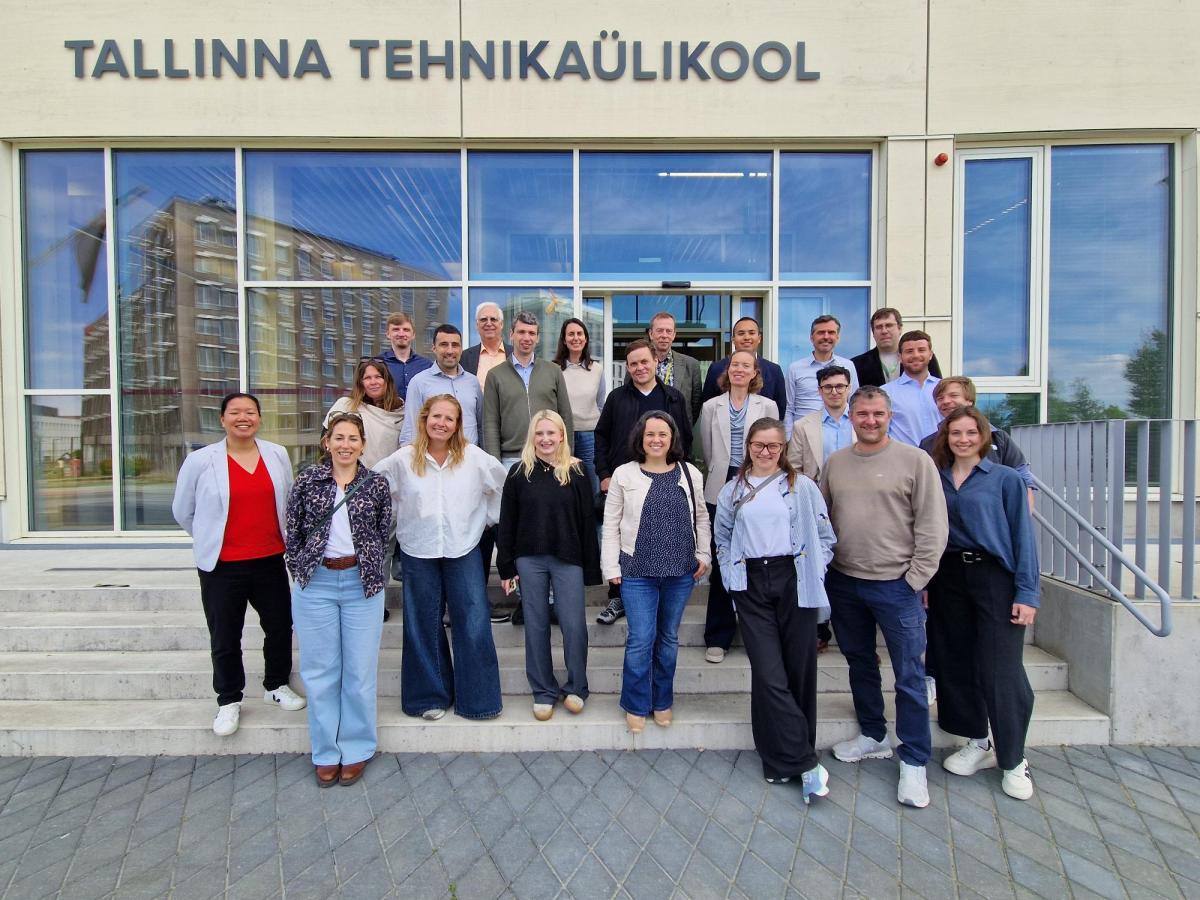
The Drastic consortium gathered in Tallin in Estonia for the fifth General Assembly.
Advancing multi-cycle circularity
A key focus of discussions was the concept of multi-cycle circularity and the factors that influence whether products and materials can be reused across multiple life cycles.
Partners explored what currently limits products from achieving greater reuse potential, identifying critical areas including product design, material performance, use phase considerations, business models and regulation. Discussions highlighted the interconnected nature of these challenges and the need for supportive frameworks that enable circular solutions to move from innovation to market adoption.
The conversation also explored how the construction sector can maximise the value extracted from materials over time. While innovation continues to drive the development of new circular solutions, participants emphasised that broader uptake will depend on viable business models, common standards and reliable methods for measuring circular performance.
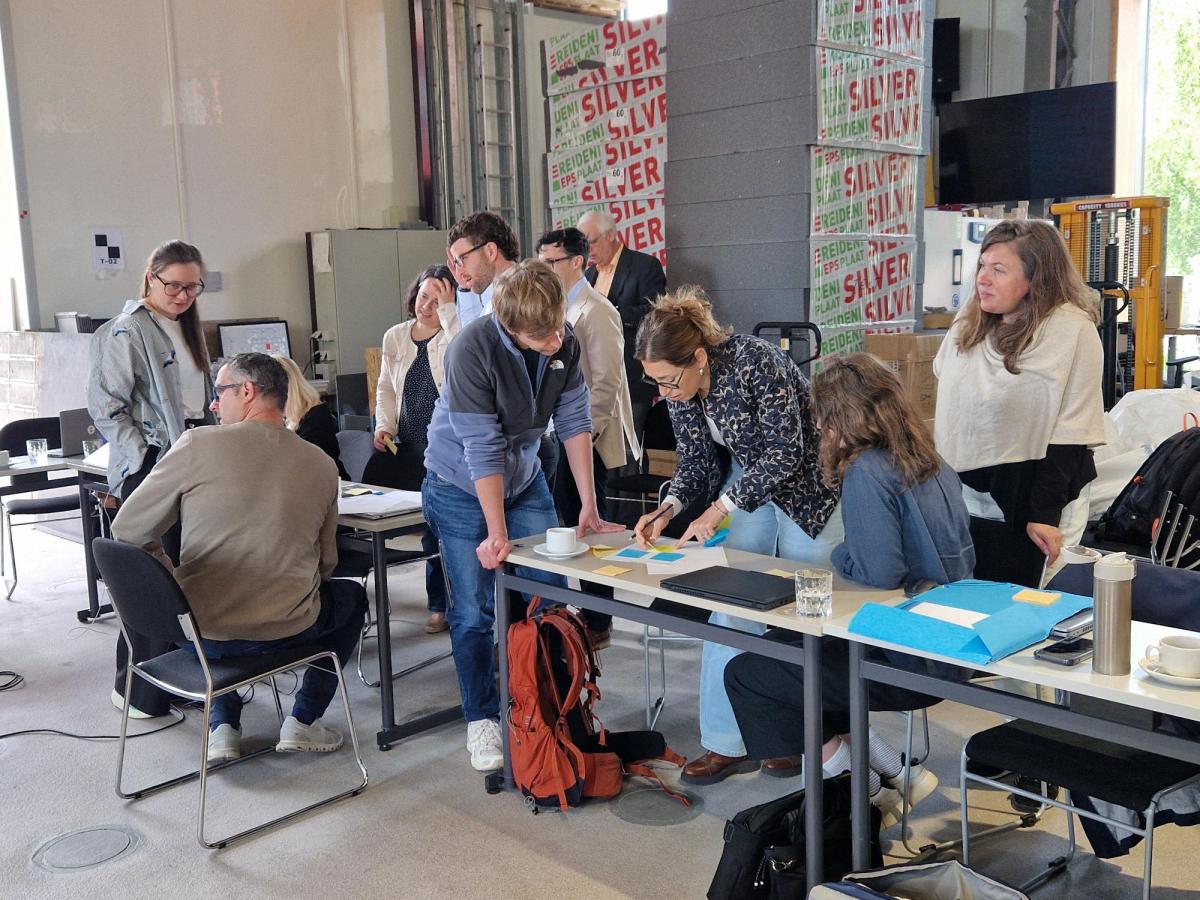
Drastic partners discussing multi-cycle circularity during the General Assembly.
Digital product passports and traceability
The second day focused on the growing role of digital tools in supporting circularity across the built environment.
Partners received updates on the development of Digital Product Passport (DPP) pilots and multi-cycle traceability platforms being developed within Drastic. Discussions explored how digital technologies can improve transparency, support informed decision-making and enable more effective tracking of products and materials throughout their lifecycle.
Tecnalia presented an overview of the European DPP statsus, including the regulatory framework. CAALA demonstrated progress on a common multi-cycle digital platform capable of assessing environmental performance at both component and building level, while MADASTER highlighted the challenges of product traceability within the fragmented construction value chain and the implications for future DPP implementation.
Together, the sessions demonstrated how digital solutions can help unlock circular value by improving access to information and supporting material reuse across multiple life cycles.
Circular solutions in practice
A highlight of the General Assembly was the circular exercise led by partners from the Nordic Demonstrator, providing participants with the opportunity to experience circular construction solutions first-hand.
Participants took part in the installation, testing and evaluation of innovative solutions developed by OMTRE and Produktif, comparing them with conventional construction approaches commonly used within the sector.
Produktif demonstrated its C-Joint solution through the assembly and disassembly of structural elements. The demonstration highlighted how design for disassembly can support future material recovery and reuse, while making installation faster and easier than conventional methods. OMTRE showcased its REblokk system through the construction of a modular wall corner, demonstrating how modular construction approaches can support flexibility, adaptability and circular material flows.
Alongside the physical demonstrations, the exercise incorporated examples of tagging and tracing technologies, helping participants visualise how construction products can be linked to digital information throughout their lifecycle. The demonstrations illustrated how Digital Product Passport frameworks could improve material traceability, support reuse decisions and strengthen transparency across construction value chains.
By combining practical testing with digital innovation, the circular exercise demonstrated how DRASTIC is addressing both the physical and informational challenges associated with circular construction.
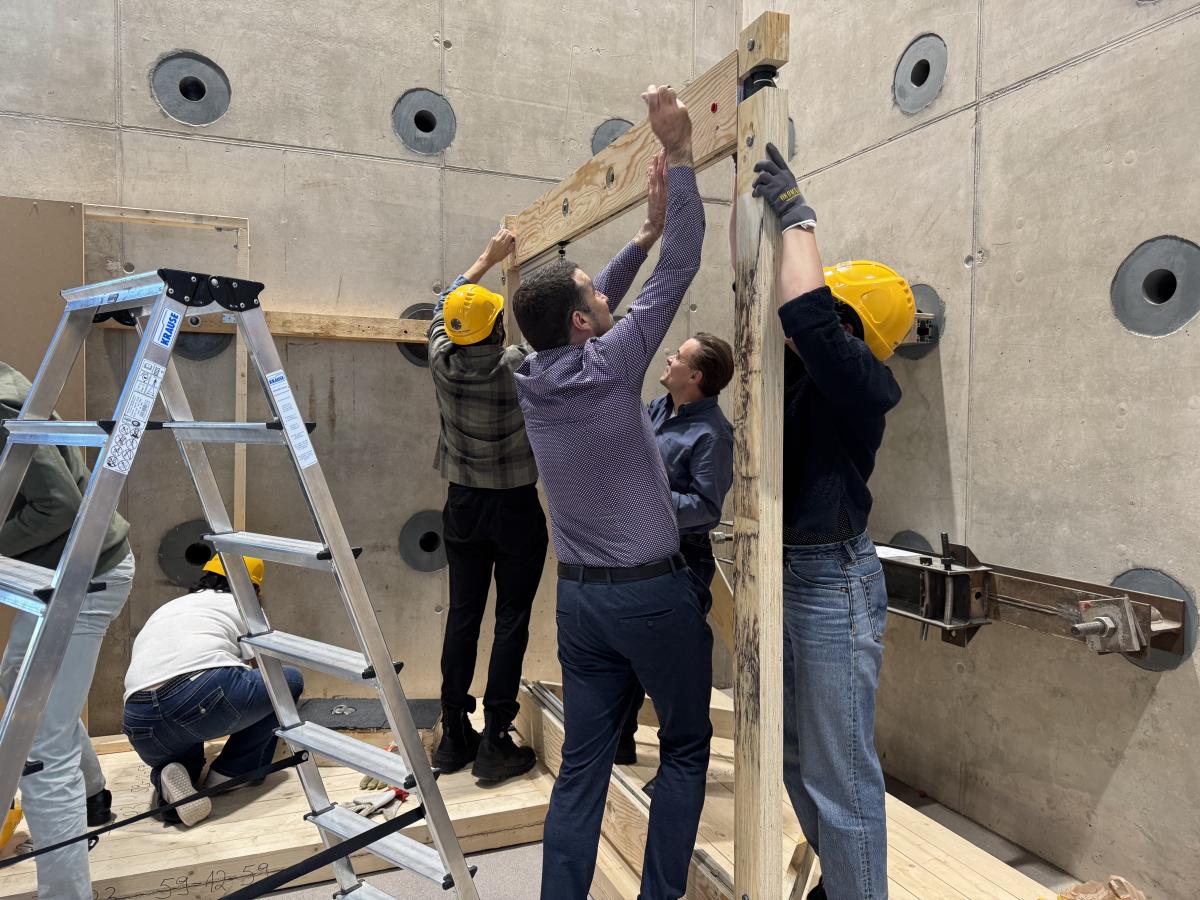
Drastic partners participating in a practical circular exercise.
Looking ahead
The discussions in Tallinn reinforced a common message: accelerating the transition to circular construction will require not only innovative products and technologies, but also supportive policies, viable business models and greater collaboration across the sector.
As Drastic moves into its next phase, partners remain focused on developing, testing and validating solutions that can help maximise resource efficiency, reduce environmental impacts and support the wider adoption of circular construction practices across Europe.