


How can circular solutions be scaled across the built environment value chain, and how does the Drastic Project play a key role in this process?
This important question was explored in detail yesterday, on March 11 2026, as part of Drastic’s project webinar: ‘Circularity in the built environment: From global vision to local action’.
Moderated by Giulia Carbonari from the World Green Building Council (WorldGBC), the webinar highlighted an important point: while circularity is widely recognised as essential for the built environment, the real challenge lies in its implementation.
With buildings responsible for a significant share of emissions, material use, and waste, the sector also presents one of the greatest opportunities to rethink how we design, construct, and reuse our built environment.
Key insights from the session:
Market perspective
Mikkel Andreas Thomassen, CEO of Smith Innovation, shared insights from the Circular Buildings Coalition Open Call. His presentation highlighted common barriers to scaling circular solutions and emphasised that policy does not begin with politics – it starts with products and solutions.
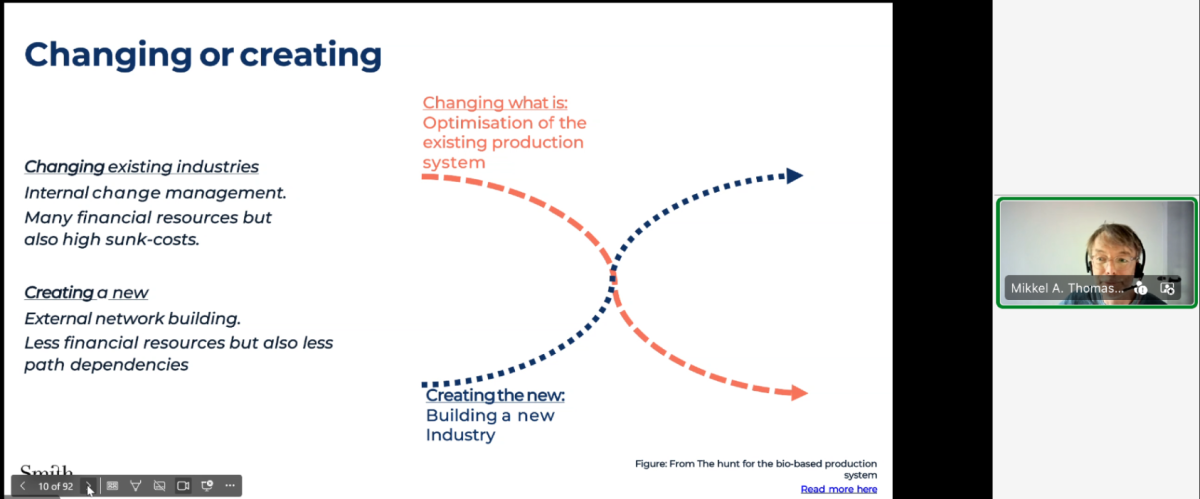
Mikkel Andreas Thomassen presenting during the Drastic webinar
Project-level innovation
Carolin Spirinckx, project manager at Drastic’s lead partner VITO, introduced how the project is both testing and advancing circular construction across Europe, via its collection of geographically diverse Demonstrators, each exploring multiple circular “R strategies” such as rethink, reuse, repurpose, and recover.
Carolin also discussed Drastic’s aims to bring together the full business value chain to reduce whole-life carbon and support scalable circular business models, propelling the European transition from a linear to a circular economy.
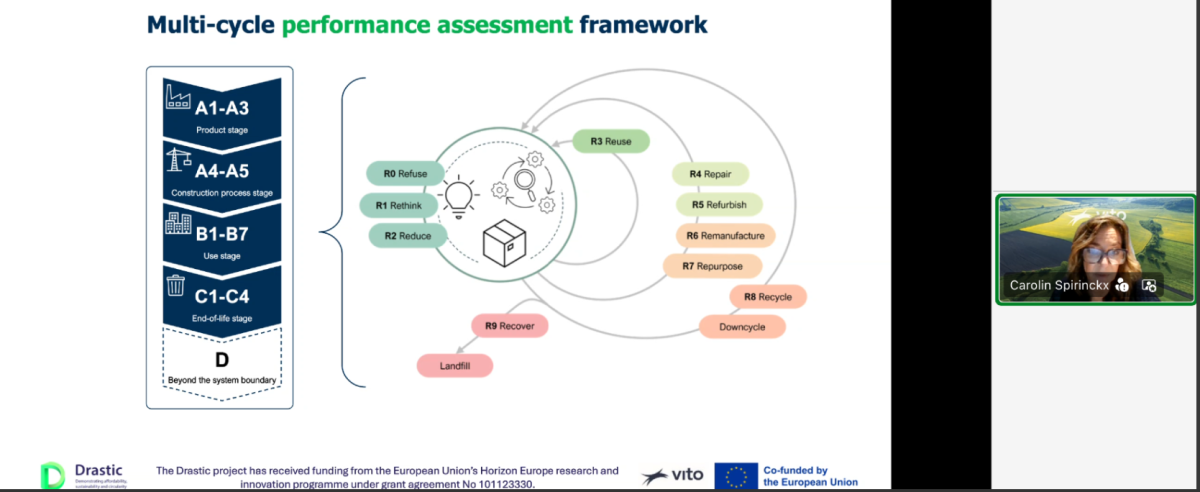
Carolin Spirinckx presenting at the Drastic webinar
National roadmap perspective
Fernanda Rocha, Project Manager & Environmental Product Declaration (EPD) Programme Administrator at Irish Green Building Council (IGBC), presented insights from the GBC’s roadmap; “Building a Circular Ireland.”
Developed with more than 200 stakeholders, the roadmap focuses on material passports, the reuse of underutilised buildings, and unlocking opportunities for bio-based materials in Ireland’s construction sector.
Fernanda discussed how the roadmap’s key aim lies in assisting Ireland to make the transition from linearity to circularity, in alignment with Drastic.
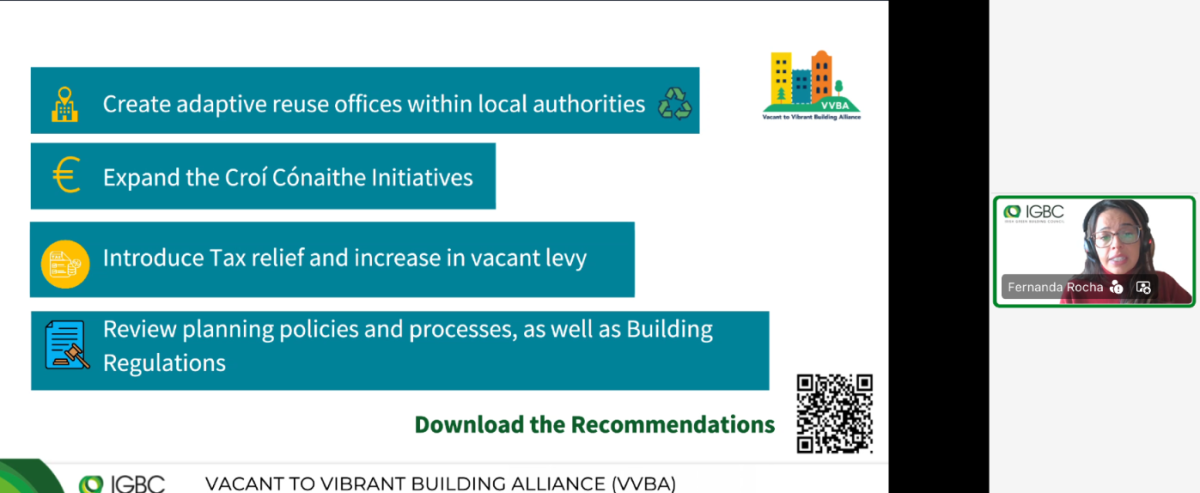
Fernanda Rocha presenting at the Drastic webinar
Standards and frameworks
Dieter De Lathauwer, Chairperson of CEN/TC 350, CEN and CENELEC, shared updates from CEN / CENELE’s work on sustainability standards for construction, including developments within CEN/TC 350.
These frameworks aim to help integrate circularity indicators into building and construction practices, and provide a shared reference point for assessing the environmental performance of buildings.
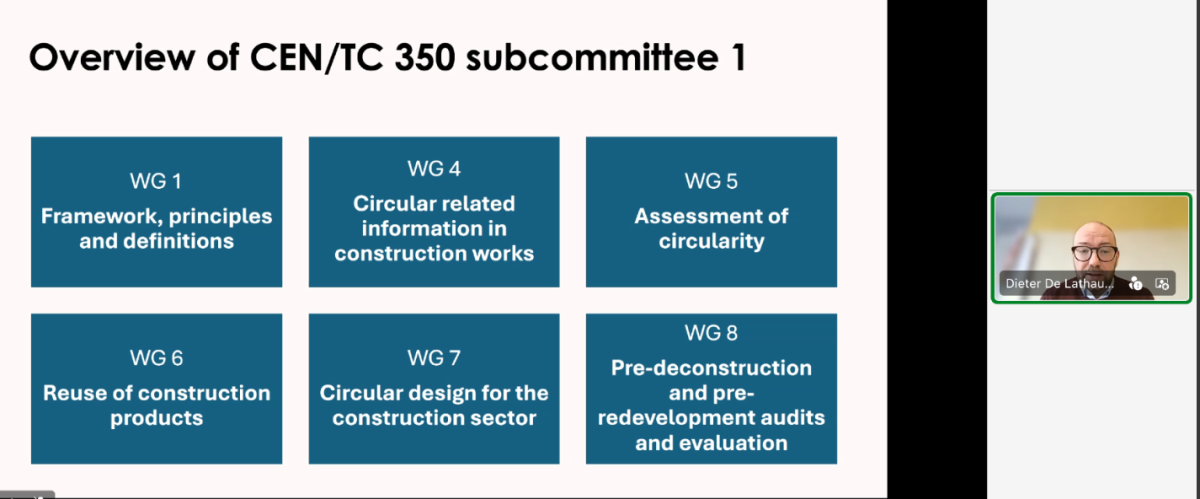
Dieter De Lathauwer presenting at the Drastic webinar
Key takeaways
A key takeaway from the webinar’s speakers was that circularity is clearly no longer just a concept, and its delivery requires collaboration across the entire value chain, as well as alignment between policy, standards, and market innovation, and strong connections between local action and European frameworks.
Initiatives such as Drastic can help to forge the vital connection between local action and a broader EU framework that can help to drive systemic change at a local, national and international level.
Drastic would like to warmly thank the webinar’s speakers and participants for their participation, ideas and discussion.
Sign up to the project newsletter to ensure you never miss a Drastic update! https://drasticproject.eu/sign-drastic-newsletter-below