


Drastic project grows Norwegian circularity with reused wood
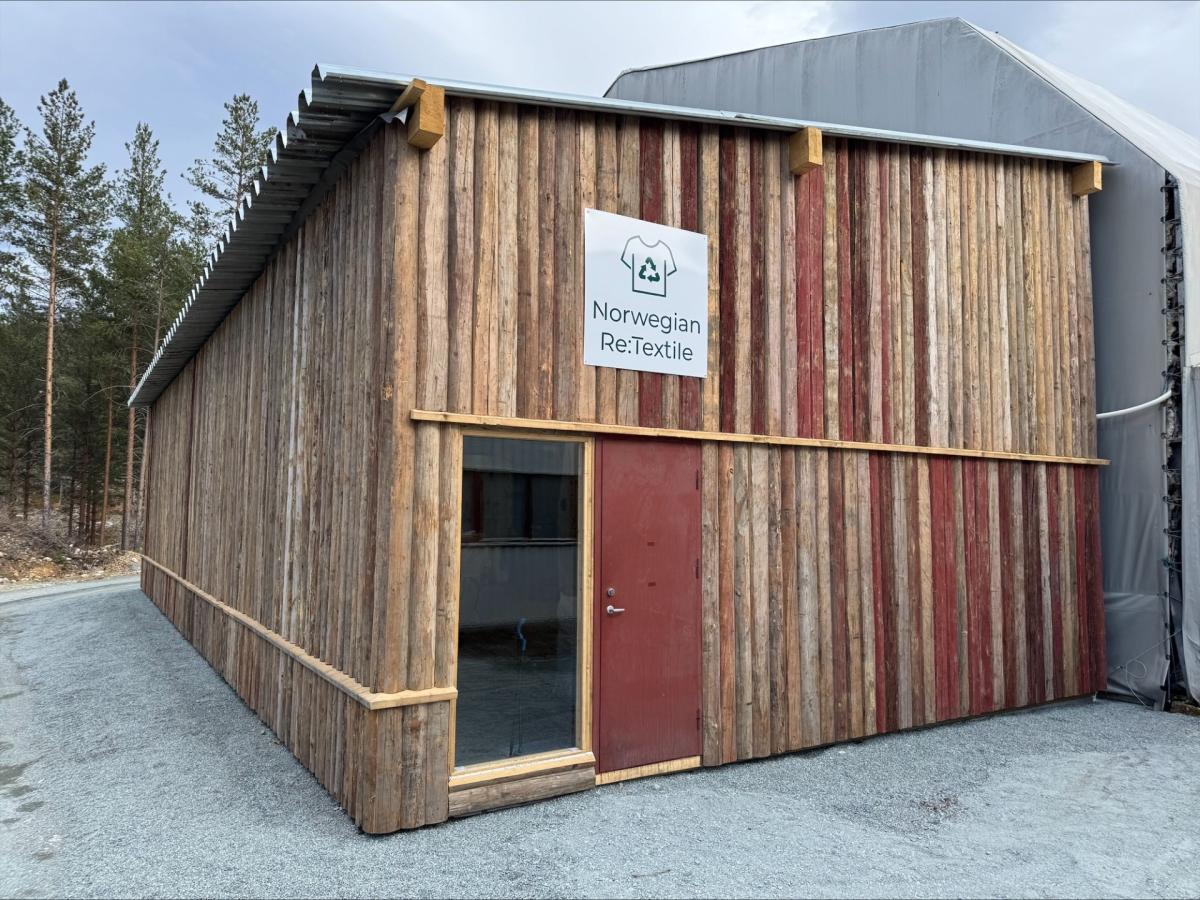
A circular construction facility built with reused wood in Norway.
The Drastic project has inched one step closer to realising the European Union (EU)’s collective goal of carbon neutrality by 2050, via the latest circular building installation development from its Norwegian Demonstrator in Krøderen, Norway.
The Drastic project’s Norwegian Demonstrator aims to pilot the multi-cycle reuse of structural wood elements to create temporary commercial constructions.
Part of this Demonstrator’s focus has been on one such commercial building—‘Re:Textile’—a circular construction facility built with reclaimed timber and reused building components in Krøderen, Norway.
Re:Textile—making space for circularity via material reuse
Commissioned in February 2025, the Re:Textile project focuses on creating a small industrial facility built entirely through sustainable, circular-economy construction methods. A key feature of the project is the extensive use of reclaimed timber for structural applications, demonstrating that high-quality reused wood can safely and effectively replace newly manufactured materials in load-bearing contexts.
The construction of Re:Textile also shows how circular economy principles can be applied in real life industrial construction contexts, by reusing the following building materials, all recovered from a decommissioned Norwegian crypto mining warehouse:
- structural timber
- glulam beams (engineered wood products made by gluing layers of timber together)
- steel roof plates
- insulation panels
Rather than treating construction materials as waste, Re:Textile demonstrates their potential for a second life in safe and high-performance structural applications. Re:Textile is not only a building — it is a practical demonstration of how the future of construction can become more circular, resource-efficient, and low-carbon.
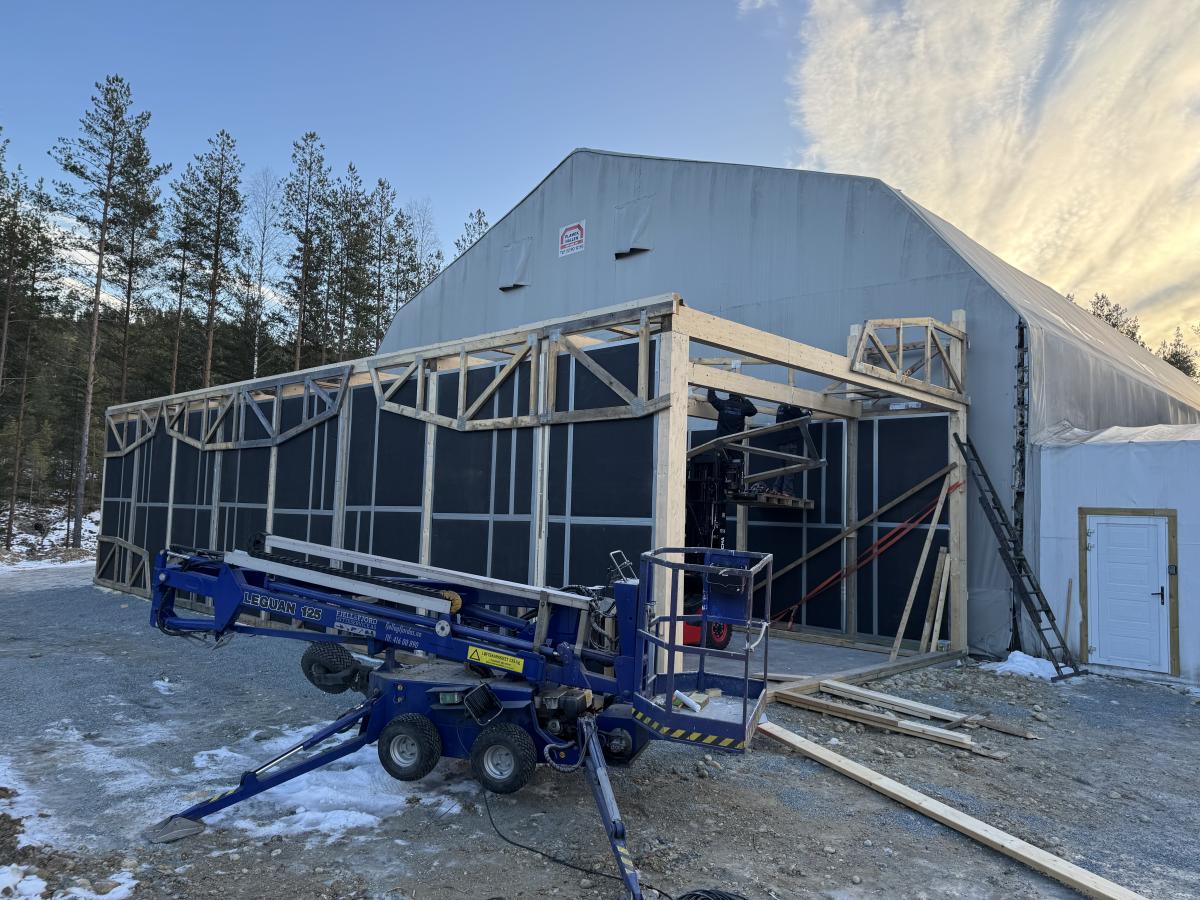
Construction of the Re:Textile barn in Krøderen, Norway.
Key Re:Textile outcomes
High material reuse rate across structural and envelope systems:
- Major structural and envelope elements are reclaimed, significantly reducing the need for new raw materials and in turn, reducing whole life carbon (WLC).
Substantial environmental impact reduction:
- The Re:Textile project serves as a practical demonstration of how circular economy principles can dramatically lower the environmental footprint of construction.
- Life Cycle Assessment (LCA) results show reductions of 38%-95% across key categories such as climate change, acidification, human toxicity, and resource use when compared to conventional building methods using virgin materials.
Drastic reduction in carbon dioxide equivalent (CO₂eq) emissions:
- Timber contributes valuable biogenic carbon storage, while the reuse of steel and other components avoids emissions associated with their production.
- Overall, the Re:Textile project has achieved an 8.6-ton reduction in carbon dioxide equivalent (CO₂eq) emissions relative to standard construction practices.
Cost-efficient construction via repurposed materials:
- Repurposed materials decrease procurement costs, while maintaining structural performance, helping to reduce overall project costs.
A scalable model for future circular industrial developments:
- The project provides a replicable and proven blueprint for future circular industrial developments.
Improved resource circulation:
- Via their local and extensive expertise, Drastic partner, Omtre, helps to facilitate local material recovery and revitalisation of existing building components.
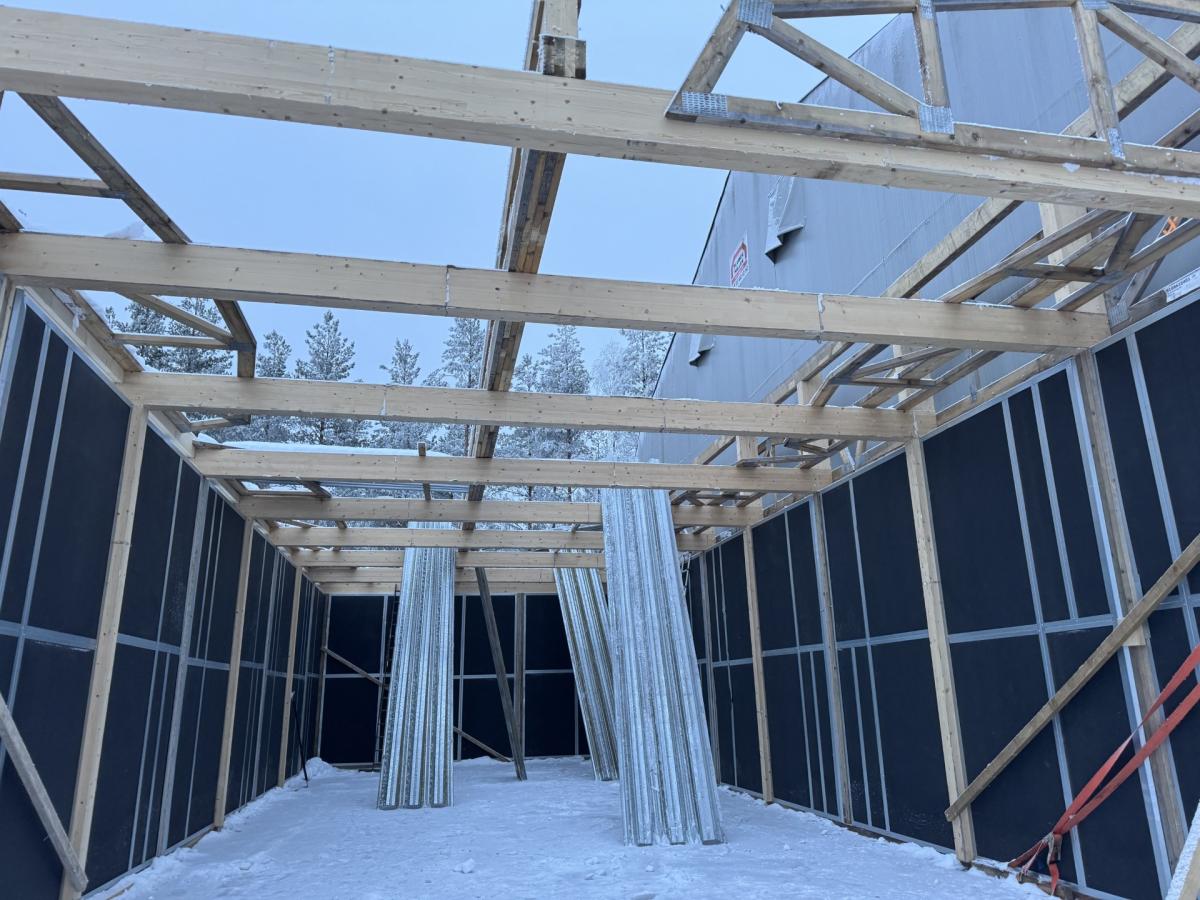
Inside the Re:Textile facility, mid-construction.
This work, led by Omtre, and supported by fellow Norwegian partners Produktif and TalTech, highlights the importance of local collaboration for material recovery and reuse. Together, these efforts demonstrate how collaborative approaches can help accelerate the transition towards a more circular and sustainable construction sector.